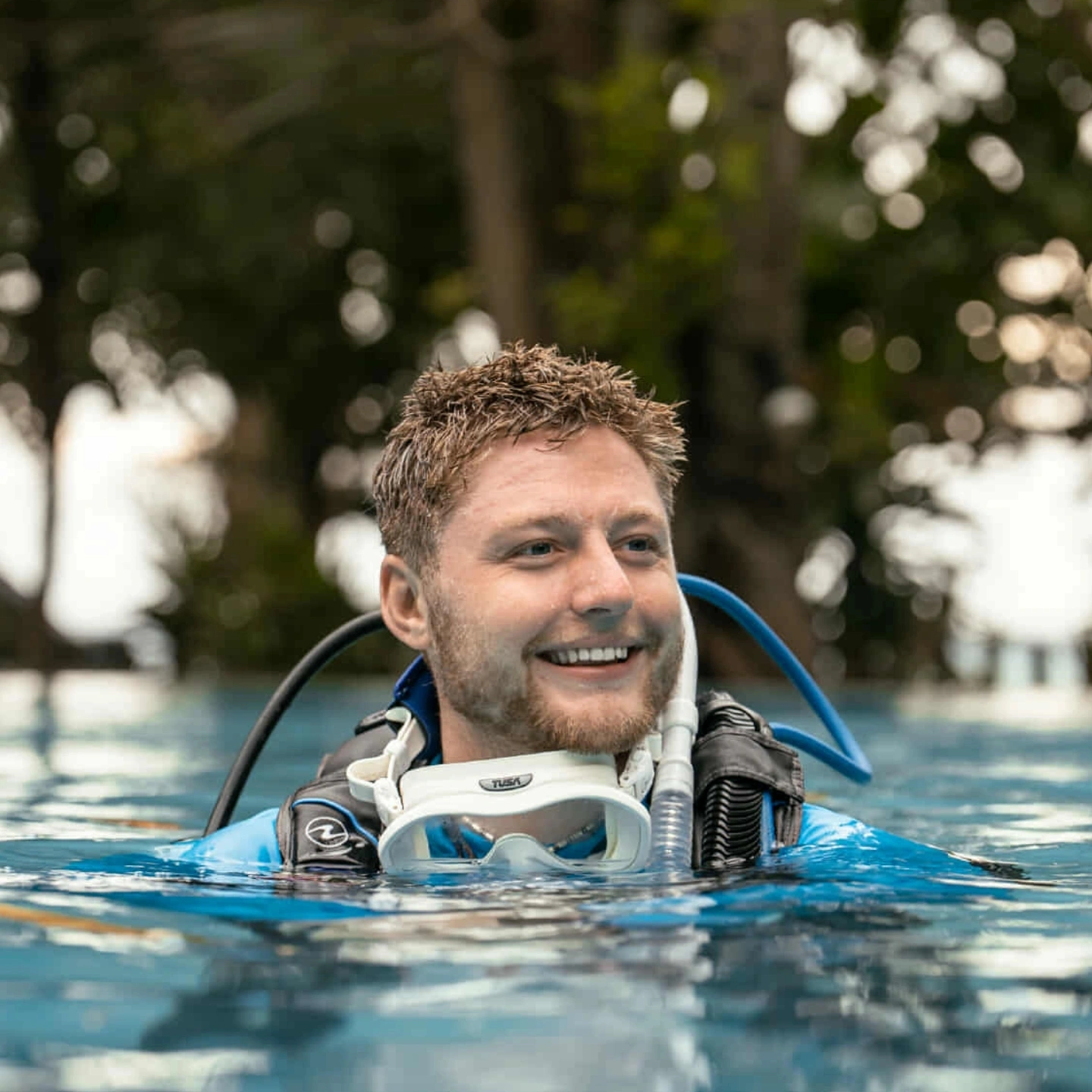
Scuba Diving Jobs in Thailand
How to Get Hired as a Divemaster, Dive Instructor, or Marine Biologist
Thailand is one of the most competitive scuba diving job markets in the world.
Every year, dive centres across Koh Tao, Phuket, Phi Phi, and the Andaman Sea receive hundreds of applications for a small number of professional roles. Most of those applications are skimmed in seconds — not read in full.
If you are looking for scuba diving jobs in Thailand, this guide explains:
- how hiring actually works (not how job boards describe it)
- what dive centre managers look for first
- how to apply in a way that gets responses
- how to stand out in one of the busiest dive destinations on the planet
Use the role selector below to access role-specific guides for Thailand.
Choose your role in Thailand
Overview: working in Thailand's dive industry
Thailand offers:
- year-round diving
- strong tourism infrastructure
- some of the highest certification volumes globally
It also offers:
- intense competition
- short hiring windows
- managers who must make decisions quickly
Most dive centres in Thailand do not rely on job boards. Hiring happens through direct applications, WhatsApp or email, and recommendations. This means your success depends far more on how you present yourself than on where you apply.
Hiring snapshot: the reality of dive jobs in Thailand
If you are applying for dive jobs in Thailand, expect the following:
- • High application volume, especially before high season
- • Managers scanning applications in under 10 seconds
- • Photos commonly expected on CVs
- • Availability and attitude weighted heavily
- • Clear, professional presentation favoured over long explanations
A well-qualified candidate with a messy or unclear application is often skipped in favour of someone easier to assess.
What dive centre managers notice first (the 7-second scan)
Across Thailand, most hiring managers look for the same things immediately:
- ✓ Certification level and agency
- ✓ Active professional status (insurance, EFR, membership)
- ✓ Total dives or teaching numbers (role-appropriate)
- ✓ Availability dates and location
- ✓ A clear, professional photo
- ✓ Overall clarity and organisation
If this information is not obvious at a glance, your application may never be opened again. This is why many successful candidates now use simple CV websites alongside (or instead of) traditional PDFs — managers can instantly see everything without downloading files.
How to apply for scuba diving jobs in Thailand
There is no single "official" process, but the most effective applications usually follow this format:
- Short WhatsApp or email message
- Link or attachment to your CV
- Optional follow-up after a few days
Long cover letters are rarely read. Clear, respectful communication works best.
Key rule:
Make it easy for the manager to understand who you are, what role you want, and when you are available — quickly.
Popular dive job locations in Thailand
While dive jobs exist across the country, applications concentrate heavily in a few areas:
Koh Tao
Training-focused, high certification volume
Phuket
Larger operations, diverse dive sites
Phi Phi
Seasonal tourism-driven work
Andaman Sea
Liveaboards and seasonal projects
Each area has slightly different expectations, which are covered in the role-specific guides above.
Explore Thailand dive jobs by region
Different Thai regions have distinct hiring patterns. Choose your location below for region-specific hiring guides:
Andaman Sea
Liveaboards, day centres in Phuket & Phi Phi, conservation projects. High-volume, seasonal (Nov–Apr), fast-paced.
Gulf of Thailand
Training-focused (Koh Tao), smaller islands, mainland operations. Year-round opportunities, high competition.
Choosing your career path in Thailand
Whether you're exploring Divemaster opportunities focusing on guest control and teamwork, developing Dive Instructor skills for high-volume teaching, or pursuing Marine Biologist roles in research and conservation, each path has distinct hiring requirements. Tailor your application to match what managers in your chosen region actually look for.
CV templates for Thailand (role-specific)
To help you apply correctly, we provide role-specific CV guidance:
Divemaster CV Template
Thailand-ready guidance
Dive Instructor CV Template
Thailand-ready guidance
Marine Biologist CV Template
Thailand-ready guidance
These templates are designed around how hiring actually works in Thailand — not generic CV advice.
Application templates for this destination
Use these short, manager-friendly templates to apply faster and keep your message clear.
Frequently asked questions
When is hiring season in Thailand?
Hiring happens year-round, but competition increases sharply before high season. Many roles are filled quickly once centres start recruiting.
Do I need a photo on my CV?
Yes. In Thailand, a professional, friendly photo is strongly recommended for dive jobs.
Is experience more important than attitude?
Both matter, but in busy dive centres, attitude, reliability, and team fit often decide between equally qualified candidates.
Should I send a PDF or a link?
Both are used. Anything that is fast to view and clearly presented works best.
Are job boards useful?
They can help with awareness, but most hiring happens directly. Strong direct applications outperform job board submissions.
Final note: how to stand out in Thailand
Getting a scuba diving job in Thailand is rarely about being "the most qualified" on paper. It is about being:
- → easy to assess
- → easy to communicate with
- → clearly suited to the role
- → professional from the first message
Choose your role above to access Thailand-specific guidance, application checklists, and CV advice designed to help you get hired — not lost in the pile.
Ready to apply with confidence?
Get a CV website built for fast screening and dive centre hiring.