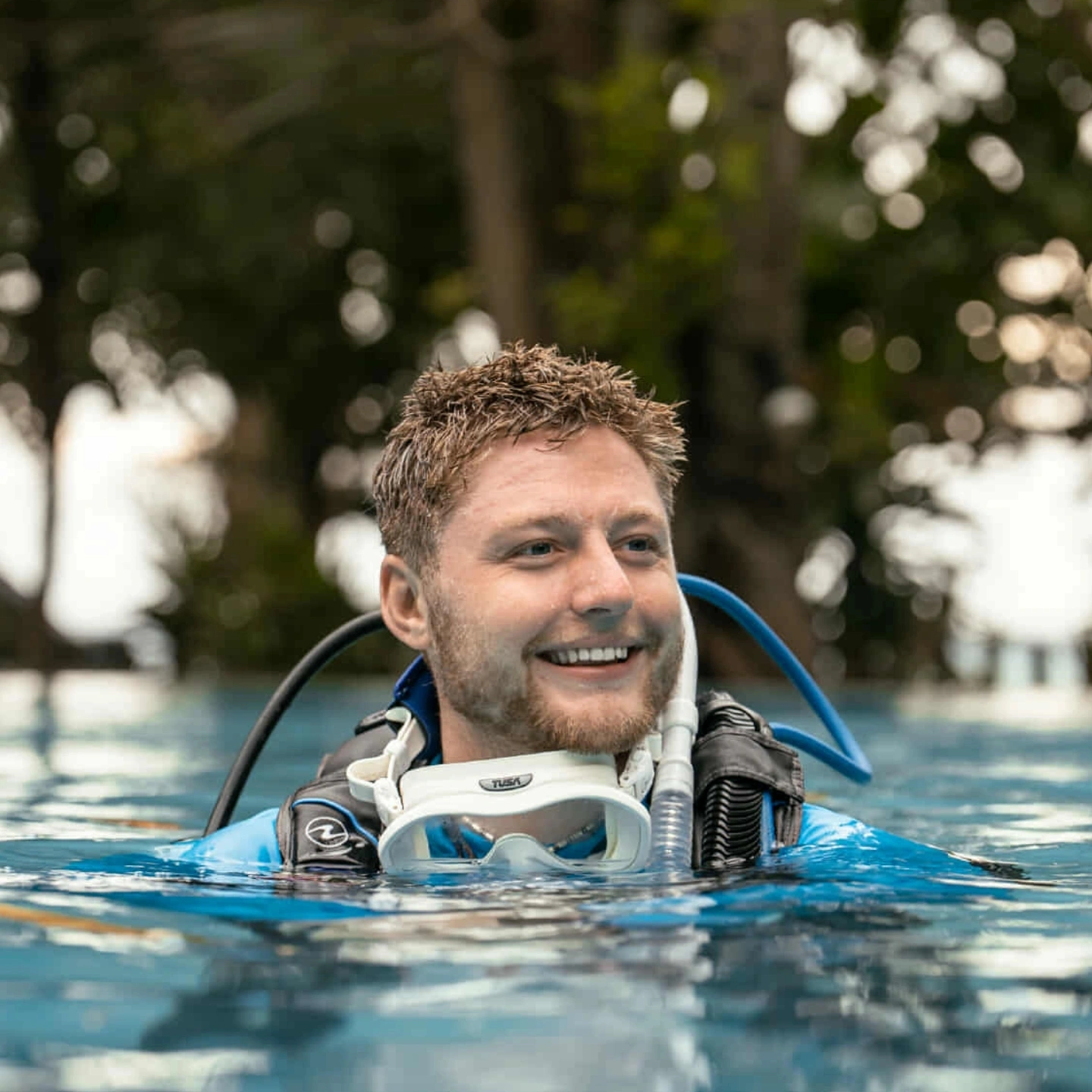
Divemaster Jobs in the Gulf of Thailand
Koh Tao & the Gulf: how Divemasters actually get hired.
The Gulf of Thailand is one of the most active places in the world to work as a Divemaster — especially around Koh Tao, where training and entry-level professional roles run year-round. It is also one of the most competitive.
If you're searching for Divemaster jobs in the Gulf of Thailand, this guide explains how Divemaster hiring really works in the Gulf, what dive centres look for first, why many qualified candidates never hear back, and how to present yourself so you stand out immediately.
This is not a job listing page. It's a practical hiring guide based on how Gulf dive centres actually operate.
The reality of Divemaster work in the Gulf of Thailand
Divemaster roles in the Gulf are heavily training-focused and people-facing.
Dive centres are looking for Divemasters who work confidently with students, support instructors efficiently, stay calm in repetitive high-volume schedules, communicate clearly with guests, and integrate smoothly into a team.
Your attitude and reliability often matter as much as your dive count.
What Gulf dive centres look for in Divemasters
When reviewing Divemaster applications, managers typically scan for:
- •Divemaster certification and agency
- •Logged dives (in context, not just the number)
- •Course-assisting experience (OW, AOW, DSDs)
- •Comfort working with students on the surface and underwater
- •Clear availability dates
- •Professional, approachable photo
If this information isn't obvious straight away, the application is often skipped — simply because there are many others to review.
The 7-second scan (Divemaster edition)
In high-volume areas like the Gulf, Divemaster applications are often judged in under 10 seconds. Managers are quickly asking:
- ✓Are they certified and active?
- ✓Do they look professional and friendly?
- ✓Can they handle students safely?
- ✓Are they available when we need them?
If those answers aren't clear at a glance, the application rarely progresses. This is why many successful candidates now use simple CV websites — everything important is visible instantly, even on mobile.
What to highlight on a Divemaster CV for the Gulf
Your CV (or CV website) should prioritise clarity and relevance.
Course and student support
- •Assisting Open Water, AOW, Rescue, DSDs
- •Managing students on the surface
- •Controlling groups underwater
Guest interaction
- •Briefings and debriefings
- •Reassuring nervous or first-time divers
- •Clear, calm communication
Reliability
- •Punctuality
- •Willingness to help across operations
- •Positive team attitude
In the Gulf, dive centres value easy-to-work-with Divemasters above flashy wording.
Common mistakes Divemaster candidates make
Many Divemasters struggle to get replies due to avoidable issues:
- •Long, text-heavy PDFs
- •Important information buried on page two
- •No clear availability stated
- •Casual or unclear application messages
- •CVs designed for office jobs, not dive centres
These mistakes slow hiring decisions — and slow applications are usually skipped.
How to apply for Divemaster jobs in the Gulf of Thailand
There is no formal process, but effective applications usually look like:
- •Short WhatsApp or email introduction
- •One clear CV or profile link
- •A polite follow-up if appropriate
Long cover letters are rarely read. Clear communication works best. Key rule: make it easy for the centre to understand who you are and when you're available — fast.
PDF CV vs CV website for Gulf Divemasters
Many Gulf dive centres now prefer links over attachments, mobile-friendly formats, and fast, scannable profiles.
A CV website allows you to show certification and experience instantly, avoid large downloads, stand out from identical PDFs, and look organised and professional.
This is exactly why Scuba CV Design builds Divemaster-specific CV websites for high-volume regions like the Gulf of Thailand.
Frequently asked questions
Is the Gulf of Thailand good for new Divemasters?
Yes, but competition is high. Presentation and attitude are critical.
Do I need a photo on my CV?
Yes. A professional, friendly photo is strongly recommended.
Are job boards useful?
They can help with visibility, but many hires happen through direct contact.
Is attitude more important than dive numbers?
Often, yes — especially in training-focused centres.
How to stand out as a Divemaster in the Gulf
Getting hired isn't about being the most experienced candidate. It's about being easy to assess, professional and approachable, reliable and organised, and ready for a busy training environment.
If a manager understands your profile in seconds, your chances improve dramatically.
Ready to Work in the Gulf of Thailand?
Create a professional CV that stands out to Gulf training centres and resorts.
Other roles in the Gulf of Thailand: